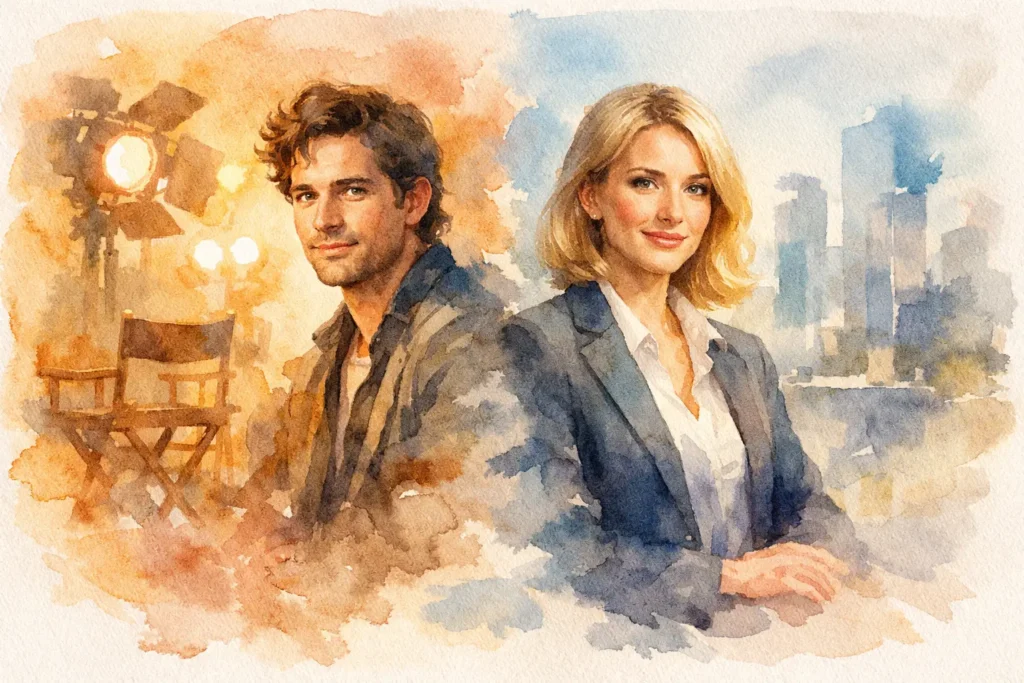
A casting director may spend only a few seconds deciding whether an actor’s headshot feels right for a role. A potential client or hiring manager can make an equally quick judgment from a LinkedIn photo. That is why actor headshots vs business portraits is not simply a question of background, lighting, or whether you wear a blazer. Each image has a different job to do.
Both should look polished, current, and like you on a good day. But a photo that helps an actor earn an audition can feel out of place on an executive bio, while a refined corporate portrait can read as guarded or overly formal in a casting submission. The strongest choice starts with understanding the audience, the purpose, and what you need viewers to recognize about you.
The Core Difference: Casting Potential vs Professional Trust
An actor headshot is a casting tool. It gives a casting director a quick, believable sense of your type, energy, age range, and presence. It should make someone curious to see what happens when you walk into the room or appear on screen. The image is not meant to show every side of your personality at once. It needs to communicate a specific, honest first impression clearly.
A business portrait is built around credibility and connection. It tells clients, colleagues, recruiters, investors, or employees who they are about to work with. Depending on your role, it may need to suggest leadership, warmth, expertise, creativity, approachability, or calm authority. The goal is not to fit a character category. It is to make your professional identity feel clear and trustworthy.
That distinction changes nearly every creative choice in the session. The best images are still natural, but natural does not mean unplanned. It means the choices support the real person and the real purpose of the photo.
Actor Headshots vs Business Portraits: What Changes?
Expression and energy
For actors, expression is often more open-ended and emotionally immediate. A strong theatrical headshot may have direct eye contact, a relaxed mouth, and a sense of thought behind the eyes. A commercial headshot may be brighter, friendlier, and more inviting. Neither needs to look like a dramatic scene still. In fact, trying too hard to show emotion can make an image feel forced. The goal is presence, not performance.
Business portraits usually call for a more intentional version of confidence. That may include a slight smile, a composed expression, or a direct look that feels easy rather than intense. A financial advisor may need to project steadiness. A creative director may want more personality. A founder building a personal brand may need several expressions for different platforms. There is room for range, but the image should still feel appropriate to the professional context where it will appear.
Wardrobe and styling
Wardrobe in an actor headshot should support type without becoming costume. Simple layers, solid colors, and clothes that fit well keep attention on your face. If you are submitting for contemporary television, a believable everyday look often works better than anything overly styled. The clothes should help someone understand your world, not distract from it.
Business wardrobe is more connected to industry expectations and brand positioning. A suit may be right for an attorney, but not necessarily for a startup founder, therapist, designer, or real estate professional. The best option is usually one level more polished than your day-to-day workwear, while still feeling recognizable. If you never wear a tie, forcing one into your portrait can create a disconnect the moment someone meets you.
For both types of sessions, fit matters more than labels. Clothing that pulls, wrinkles easily, or feels unfamiliar tends to show up in posture and expression. Bring options when possible, then make the final choices with the intended use in mind.
Background, lighting, and composition
Actor headshots are typically tighter and cleaner. The face is the focus, with minimal visual information competing for attention. Backgrounds are often neutral, softly textured, or subtly environmental, but they should never confuse the viewer about where to look. Lighting should reveal the eyes, skin texture, and natural features without flattening the face or pushing the image into glamour photography.
Business portraits have more flexibility. A clean studio setup may be ideal for a leadership team that needs consistent website and press images. An office, city setting, or environmental location can add useful context for entrepreneurs and professionals whose work benefits from a sense of place. A chef in a kitchen, an architect in a studio, or a consultant in a bright workspace can use the environment to reinforce what they do.
The trade-off is clarity. An environmental portrait can feel more personal, but it can also become dated quickly if the space is too specific or the background is busy. A simple studio portrait is highly versatile, though it may say less about your work. Often, a combination of clean headshots and a few wider lifestyle portraits provides the most practical range.
Retouching and authenticity
Retouching should support confidence, not create a different person. This matters especially for actors, because casting wants to see the person who will arrive at the audition. Temporary blemishes, lint, and small distractions can be cleaned up. Permanent features, skin texture, and the character of your face should remain intact.
The same principle applies to business portraits. Over-retouching can undermine trust, particularly when clients, team members, and candidates later meet you in person. A professional photo should look refined and well finished, not filtered into an unrealistic version of yourself. Good lighting, careful posing, and clear direction do more for an image than heavy editing ever will.
When One Session Can Cover Both Needs
There are situations where one session can produce usable images for both acting and business. An actor who teaches, coaches, produces, or runs a creative business may need both types of visuals. A professional with an on-camera role may benefit from a portrait that has more life and personality than a traditional corporate headshot.
Still, it is usually a mistake to expect one frame to do everything. A casting image needs to be unmistakably actor-focused. A LinkedIn profile or company website may benefit from a little more polish, context, or leadership presence. Rather than compromising on one generic image, plan for distinct looks during the same appointment if your photographer offers that approach.
This is where a guided session is especially valuable. Honest feedback can help you see when an expression reads warm versus tentative, confident versus overly serious, or relaxed versus disengaged. Most people are not able to judge that accurately while standing in front of a camera. They should not have to.
Choosing the Right Direction Before You Book
Start by identifying where the images will live and who needs to respond to them. If you are an actor, consider the roles you are pursuing now, not only the roles you hope to play someday. Think about whether your strongest lane is commercial, theatrical, comedy, drama, or a mix. Bring a few current examples of casting breakdowns if they help clarify the market you are targeting.
If you need a business portrait, consider your audience and the next professional step you want the image to support. Are you applying for senior roles, building a consulting practice, updating a company leadership page, or creating a more consistent personal brand? A portrait for a corporate team should also account for the company’s existing visual style so everyone looks cohesive without looking identical.
You do not need to arrive with every decision made. At SoVane Photography, the process is designed to include clear direction on wardrobe, expression, posing, and image selection. The useful preparation is not perfect posing. It is clarity about your goal.
A Better Test Than “Do I Look Good?”
After viewing your images, ask a more useful question: does this photograph make it easy for the right person to see me in the right context? For an actor, that may mean a casting director immediately understands your grounded, sharp, funny, or emotionally available presence. For a business professional, it may mean a prospective client sees someone capable, approachable, and ready for the work.
Looking good is part of the process. Looking believable, confident, and aligned with your next opportunity is what makes the image work long after the session ends.