
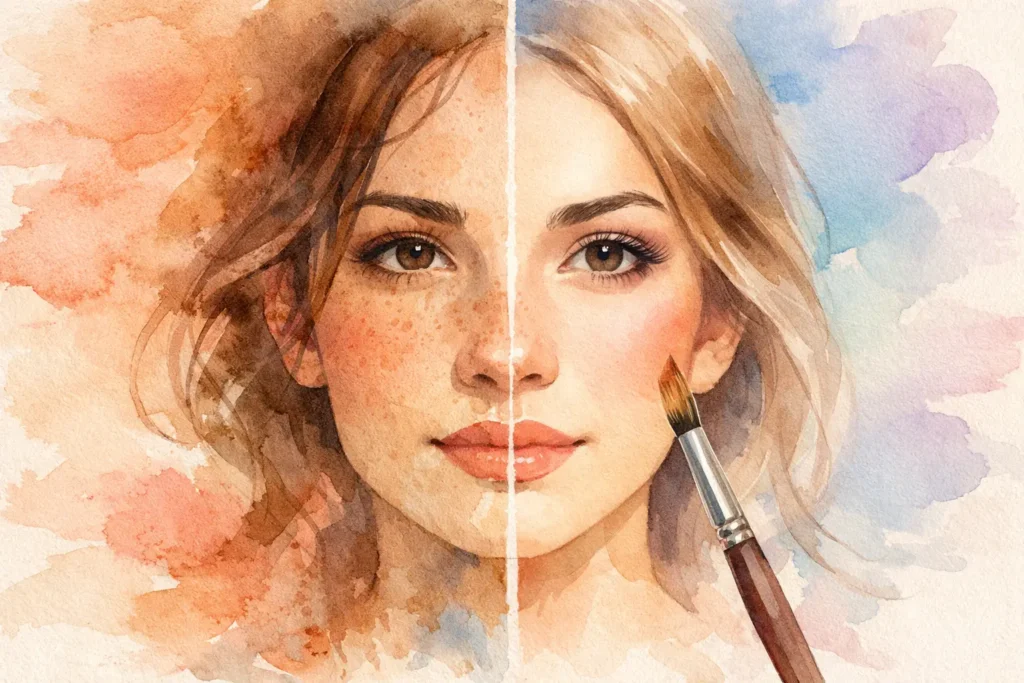
A headshot can be polished without looking polished. That is the line most people are trying to find when they ask, “headshot retouching how much is too much?” They want to look rested, professional, and camera-ready, but they do not want a casting director, client, colleague, or new hire to wonder who the person in the photo actually is.
The right amount of retouching is not about following a fixed rule. It is about protecting recognition. A strong headshot should make someone feel confident before a meeting, audition, or networking event because it reflects how they look at their best on a normal day. It should not create a version of them they have to live up to.
Headshot Retouching: How Much Is Too Much?
Too much retouching happens when the image stops communicating a real, current person. It may still look attractive, but it no longer does its job professionally.
For an actor, that disconnect can create a problem in the audition room. Casting needs to know who will walk through the door. For a business professional or entrepreneur, an overly altered LinkedIn photo can weaken the trust the image was meant to build. For a corporate team, inconsistent retouching can make one employee look unusually filtered next to everyone else.
The goal is not perfection. The goal is a clear, confident, believable first impression.
A useful test is simple: if someone who knows you well would say, “That looks like you on a really good day,” the retouching is probably on track. If they say, “Wow, you look different,” it is likely gone too far.
What Natural Retouching Actually Does
Professional retouching often addresses things the camera emphasizes more than the human eye does. Studio lighting, close lenses, and high-resolution files can bring temporary redness, under-eye shadows, dry skin, flyaway hairs, and small distractions to the surface. Correcting those details is not dishonest. It helps the viewer focus on your expression.
Natural retouching may soften a temporary blemish, reduce a distracting shine spot, clean up stray hairs, balance uneven skin tone, and gently brighten tired-looking under-eyes. It can also refine small wardrobe distractions or correct color issues that make skin look too warm, too cool, or dull.
Notice the common thread: these adjustments reduce distractions. They do not change identity.
Texture should remain visible. Skin has pores, fine lines, and natural variation. When all of that is erased, the result can look waxy or overly smooth, especially on professional platforms where people are accustomed to seeing real faces. A little texture is not a flaw in a headshot. It is evidence that the image is honest.
The Signs Your Headshot Has Been Over-Retouched
The most obvious warning sign is skin that no longer behaves like skin. Heavy smoothing can remove every pore and leave the face looking blurred, plastic, or painted. This is especially common when an app applies a beauty filter across the whole image instead of making selective adjustments.
Eyes are another area where restraint matters. Brightening the whites slightly or lifting heavy shadows can be helpful. Making the whites pure white, changing eye color, enlarging the eyes, or adding an artificial catchlight can make a portrait feel unnatural very quickly. The same goes for teeth. A subtle improvement in color may be appropriate, but bright-white teeth can pull attention away from an otherwise genuine expression.
Face reshaping is usually where a useful headshot becomes misleading. Narrowing a jawline, changing a nose, removing a double chin entirely, or dramatically lifting features may create a more conventionally flattering image, but it can also compromise trust. Small camera-related distortions can sometimes be addressed carefully. Major structural changes should not be part of standard headshot retouching.
Age is not a problem to solve, either. Removing every line from a face can make a senior executive look less credible, an actor less castable, or anyone less recognizable. Character, experience, and warmth often live in the details people are tempted to erase.
The Right Standard Depends on How the Headshot Will Be Used
Retouching should support the purpose of the image. There is no single setting that works for every client.
Actors generally benefit from the most faithful approach. Their headshot is a casting tool, not a glamour portrait. A temporary breakout can be removed, and distracting shadows can be softened, but freckles, facial structure, scars that are part of their current appearance, and natural texture often matter. Casting professionals are looking for type, presence, and authenticity. They need a useful representation of the person they may call in.
Business professionals have slightly more room for polish, particularly when a headshot will appear on LinkedIn, a company website, a speaker bio, or a press feature. The image should look composed and intentional, but it still needs to match the person who arrives at the client meeting or joins the video call. A polished headshot signals care. A filtered headshot can signal distance.
For corporate teams, consistency is part of the strategy. Everyone does not need identical skin or identical features, but the level of retouching should feel even across the group. Similar color treatment, thoughtful cleanup, and a consistent approach to skin texture create a professional set of images without making the team look manufactured.
Why Retouching Cannot Fix a Weak Session
Retouching is the final refinement, not the foundation of a good headshot. If the lighting is unflattering, the expression feels guarded, or the wardrobe is working against the image, no amount of editing will create the kind of natural confidence people respond to.
This is why direction during the session matters. The most effective headshots are built before the shutter clicks: flattering light, a camera angle that suits the person, a relaxed expression, and clothing that supports the intended message. When those elements are in place, post-production can stay light and precise.
Clients sometimes arrive worried about a feature they see as a flaw. Often, that concern becomes less significant once they see themselves in good light with clear direction. A photographer can help distinguish between something genuinely distracting in a frame and something that is simply part of a person’s face. That conversation is more valuable than automatically removing every imperfection.
How to Ask for Retouching You Will Feel Good About
The clearest request is not “make me look better.” It is “make me look like myself at my best.” That gives the photographer a useful standard and leaves room for professional judgment.
Before editing begins, mention any temporary concerns you would like addressed, such as a breakout, bruise, or recent irritation. It is also fair to share areas you feel self-conscious about. Honest feedback helps shape the approach, especially when the goal is to reduce a distraction rather than alter a defining feature.
It also helps to be specific about where the image will appear. An actor’s submission photo, a law firm bio, a founder’s website portrait, and an internal employee directory may call for different degrees of finish. A good retouching process considers that context rather than applying the same edit to every face.
If you receive a proof and the retouching feels too light or too heavy, say so plainly. The best result is collaborative. You should not have to choose between looking polished and looking recognizable.
Keep the Person in the Picture
A headshot has a short window to communicate something real: confidence, approachability, credibility, presence. Those qualities do not come from flawless skin or altered features. They come from a photograph that feels aligned with the person viewers will meet.
The best retouching is often the work no one notices. It clears away visual noise, respects the face, and lets your expression carry the image. When you look at the final headshot and recognize yourself immediately, that is not a compromise. It is the point.