
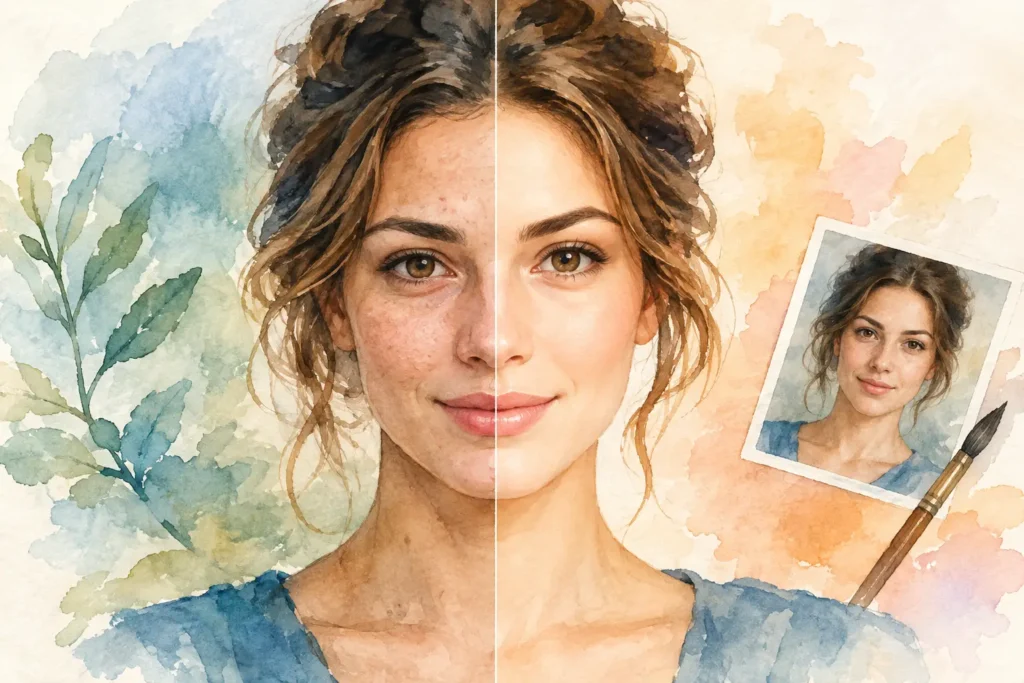
A strong headshot should make someone want to meet you, not wonder who edited the photo. That is the real question behind headshot retouching limits: how much polish helps you present your best self, and when does it start working against the purpose of the image?
For actors, a headshot needs to be truthful enough that a casting team recognizes you the moment you walk into the room. For professionals, it should support trust before a recruiter, client, or colleague has met you. In both cases, retouching is useful when it removes distraction. It becomes a problem when it removes identity.
What Retouching Is Actually For
Retouching is not meant to create a different face. It is meant to refine what the camera captures so the viewer can focus on your expression, presence, and professionalism.
A high-resolution camera sees more than people see in normal conversation. A small blemish, temporary redness, stray hair, lint on a jacket, or a shine spot on the forehead can become more noticeable in a still image than it is in person. Addressing those details is not deceptive. It is part of producing a finished, intentional photograph.
The same goes for subtle adjustments to color, exposure, under-eye shadows, and skin texture. A good retouch should make the image feel clean and current while preserving the natural variation that makes a face look alive. You should still look rested, capable, and recognizable, not airbrushed into a generic version of yourself.
The difference often comes down to intent. Is the adjustment helping the image represent you accurately on a good day? Or is it trying to hide a feature that is part of how people know you? The first supports your goals. The second can create an expectation your photo cannot meet.
The Headshot Retouching Limits That Build Trust
There is no single rule for every client. An actor submitting for a character-driven role, an executive updating a company bio, and an entrepreneur launching a new website each have different needs. Still, the most effective headshot retouching limits are grounded in one standard: the finished image should hold up in real life.
Keep temporary details in perspective
Temporary issues are usually appropriate to soften or remove. Think of a breakout, a scratch, a bruise, irritated skin, a piece of food caught in a tooth, or a distracting flyaway hair. These are not defining features, and they may not even be present a week after the session.
The same is often true of minor clothing distractions, such as lint or a wrinkled collar. If an adjustment helps the viewer stay focused on you rather than a random visual interruption, it usually serves the photograph.
Be careful with permanent features
Freckles, scars, moles, smile lines, facial asymmetry, and natural texture require more judgment. These features can be central to your appearance and, for actors especially, may contribute to the qualities that make you memorable.
That does not mean every permanent feature must be emphasized. A photographer and retoucher can reduce a distracting shine across a scar or lightly soften an under-eye crease without erasing the character of your face. But fully removing recognizable features can make a headshot feel unfamiliar to the people who meet you afterward.
For business headshots, overly smoothing the skin is one of the most common ways an image loses credibility. Professional does not mean poreless. A little texture communicates that this is a real person, photographed well.
Avoid reshaping that changes recognition
Subtle lens correction and thoughtful posing can create a flattering, natural result before retouching begins. That is very different from narrowing a nose, changing a jawline, enlarging eyes, drastically whitening teeth, or altering body shape after the fact.
Those changes can seem tempting when you are looking closely at your own image. Most people are their own toughest critics. But a headshot is not a beauty contest or a social media filter. It is a professional introduction. If the retouch changes the proportions people associate with you, it can undermine the confidence the image is supposed to create.
Why Your Use Case Changes the Decision
An actor’s headshot has a particularly clear boundary: casting needs to know who will walk through the door. Retouching should support a strong, camera-ready version of you, but it should not conceal age, alter defining features, or create a version of your skin that is impossible to recognize in person. Authenticity is practical here. It protects the relationship between the submission, the audition, and the role.
For a corporate or LinkedIn headshot, the expectation is polished and approachable. A small amount of cleanup can be valuable because the image may appear on a company website, presentation, proposal, or press mention for years. Still, the best result is one that feels consistent with how you show up in a meeting. If your team meets you after seeing the photo, there should be no disconnect.
Entrepreneurs and public-facing leaders may want a more elevated visual style because their headshot is part of a broader personal brand. That can include more intentional color work, a refined background, and careful skin cleanup. The limit remains the same: style should clarify your brand, not disguise the person behind it.
The Best Retouching Starts Before Editing
The most natural headshots are not rescued in post-production. They are built during the session through good light, purposeful wardrobe choices, thoughtful grooming, and clear direction.
This matters because the camera responds to small details. A shirt that fits well, makeup that works for photography, controlled shine, and a relaxed expression reduce the need for heavy editing. So does selecting the right image. A frame with genuine eye contact and a comfortable expression will usually outperform a technically perfect image that feels stiff.
A guided session also gives you room to notice what is bothering you before the image reaches the retouching stage. Maybe you prefer one side of your face, want to avoid a particular expression, or need an image that feels more authoritative than casual. These are useful conversations. They can often be addressed through posing, framing, and image selection rather than digital alteration.
At SoVane Photography, the goal is not to hand you a photo that looks good only on a screen. It is to create real, confident images that work where your career happens: auditions, team pages, professional profiles, introductions, and conversations that matter.
How to Talk About Retouching Before Your Session
You do not need to know retouching terminology to communicate what you want. Be direct about the outcome. You might say that you want to keep your freckles, soften temporary redness, reduce a distracting breakout, or make sure your skin still looks like skin.
It also helps to mention the ways you will use the photo. If you are updating an actor portfolio, say so. If the image is for an executive bio or a company-wide team page, that context affects the level of consistency and polish needed. An honest conversation upfront makes it easier to set expectations and avoid surprises later.
If you are unsure whether a feature should be retouched, ask yourself a simple question: would someone who knows me notice its absence? If the answer is yes, consider keeping it or treating it very lightly. Your headshot should make you feel confident, but confidence tends to land best when it is built on recognition rather than reinvention.
When a Bigger Change Needs a Different Conversation
Some requests go beyond routine headshot retouching. Significant skin concerns, a major change in appearance, or a desire to look substantially younger or thinner may reflect a deeper concern about how you are being perceived. That deserves respect, not judgment.
It is also worth considering the practical consequence. If the photo will be used for casting, networking, hiring, speaking engagements, or client-facing work, a highly altered image can create pressure when you are seen in person. A more accurate headshot may feel vulnerable at first, but it often gives you a stronger foundation because it is something you can stand behind.
The best headshot is not the one that makes you unrecognizable in pursuit of perfection. It is the one that lets people see you clearly, trust what they see, and look forward to the conversation that follows.