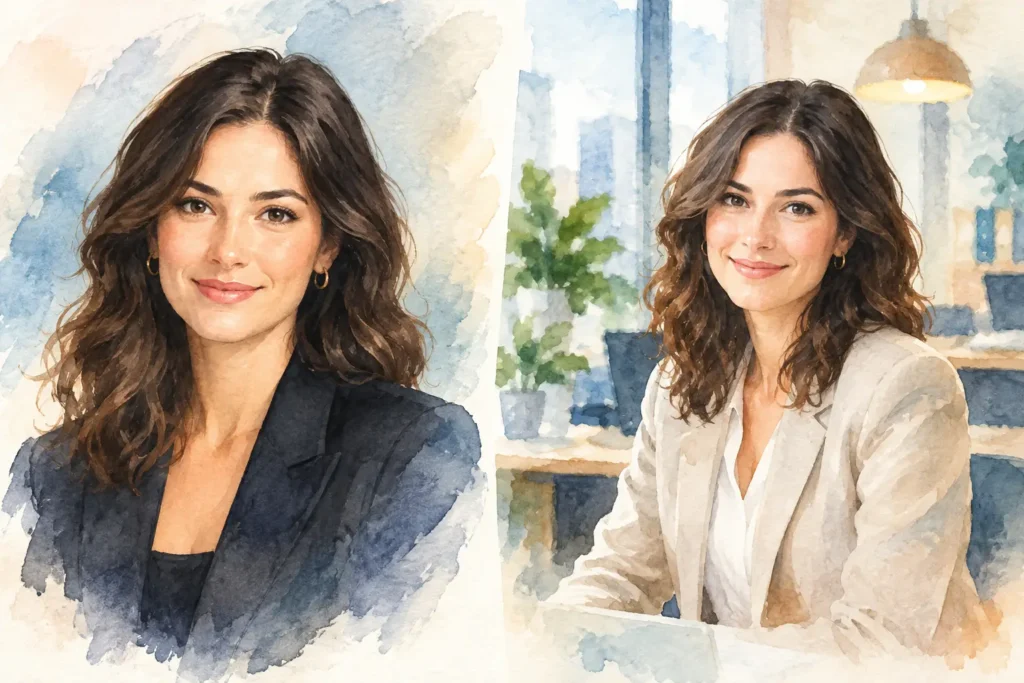
A headshot can be technically excellent and still feel slightly off for its intended use. A polished studio portrait may not match a company’s approachable, workplace-focused culture. An office image may feel credible for a leadership bio but too busy for a casting profile. That is why studio versus office headshots is not simply a question of convenience. It is a decision about context, audience, and the professional impression you need the image to make.
For New York professionals and teams, both settings can produce real, confident images. The right choice depends on where the photo will appear, what you want people to understand about you quickly, and how much visual consistency your organization needs.
What a Studio Headshot Communicates
A studio headshot puts the focus squarely on you. Controlled lighting, a simple background, and a guided process reduce visual distractions so that expression, eye contact, posture, and personal presence carry the image. This is especially useful when the headshot needs to work in several places, such as LinkedIn, a speaker bio, a company website, a press feature, or an actor’s submission materials.
The practical advantage is control. In a studio, the photographer can shape the light precisely, keep backgrounds consistent, and make small adjustments throughout the session without competing with changing weather, window glare, office activity, or a cramped conference room. That control often creates a more refined and versatile final image.
Studio does not have to mean stiff or overly formal. A good session should still reflect the person being photographed. An entrepreneur may need a direct, energetic look that supports a personal brand. A financial executive may need calm authority. An actor may need images with enough openness and specificity for casting professionals to see range. The setting is neutral, but the result should not be generic.
When a Studio Is Usually the Better Choice
Choose a studio session when your headshot needs broad flexibility, when brand consistency matters more than environmental context, or when your office does not offer a clean, well-lit place to shoot. It is also a strong choice for anyone who feels anxious in front of the camera. A dedicated studio session creates time to settle in, receive clear direction, and focus without coworkers walking past or meetings starting nearby.
For individual professionals, a studio is often the safest investment because the image can follow you as your role, employer, or career path changes. A clean background rarely feels dated, and it will not tie your visual identity to one specific office location.
What an Office Headshot Communicates
Office headshots place you in the environment where your work happens. When done well, they can feel immediate, credible, and connected to the culture of your organization. A bright workspace, architectural detail, a conference room, or a thoughtfully chosen window-light location can give an image a sense of place without taking attention away from the person.
This format is particularly effective for corporate teams, consultants, founders, and leadership groups whose clients value visibility into the people behind the business. An office setting can suggest collaboration, scale, energy, or a connection to a specific industry. For example, a design firm may benefit from a more creative workspace in the background, while a real estate team may want a polished office look that reinforces local expertise.
The strongest office portraits still need restraint. A cluttered desk, fluorescent ceiling lights, random signage, half-empty coffee cups, or a crowded open floor plan can make a professional image look accidental. Environmental context should support the subject, not compete with them.
When an Office Session Makes More Sense
Office headshots are often the right choice when a company needs to photograph multiple people efficiently and maintain a shared visual style across a team. Bringing the photographer to the office reduces travel for employees and can make participation easier, especially for busy leadership teams.
They also work well when the office itself is part of the brand story. A distinctive New York workspace, an attractive lobby, or a clean, modern meeting area may add genuine value. The key question is whether someone viewing the photo will understand something useful from the environment. If the answer is no, a studio background may be the stronger visual choice.
Studio Versus Office Headshots: The Real Trade-Offs
The decision is rarely about which option is objectively better. It is about which setting helps the photo do its job.
A studio offers consistency, control, and longevity. It is easier to match new hires over time, keep lighting uniform, and create a cohesive gallery for a website or leadership page. It also minimizes logistical risks. There is no need to clear a room, negotiate around a packed calendar, or hope the available daylight cooperates.
An office offers relevance and convenience, particularly for larger teams. It can make a company feel more human and grounded, while showing the work environment in a subtle way. But it requires more planning. The location has to be evaluated for space, light, noise, foot traffic, and background distractions. A great office does not automatically create a great headshot location.
Budget and timing can also shape the choice. For a team of 30 people, on-location photography may be the most efficient path. For a new executive who wants several polished looks and more individual attention, a studio session may offer better value. Neither option should be treated as a shortcut. Strong headshots come from thoughtful direction, flattering light, and a clear understanding of how the images will be used.
Match the Setting to the Image’s Job
Before scheduling, identify the main purpose of the headshot. If you are updating a LinkedIn profile, applying for speaking opportunities, or building a personal website, ask whether your audience needs to see your workplace or simply needs to trust you. In many cases, a simple studio portrait is more adaptable.
If you are refreshing a company’s About page, preparing a recruiting campaign, or creating a consistent set of employee profiles, consider how the images will look together. Some organizations use a studio-style setup brought into the office. This approach can offer the convenience of on-location scheduling while preserving a clean, unified look across the team.
Actors have a different set of priorities. Casting headshots generally benefit from minimal visual context because the viewer needs to connect with the actor’s face, type, and presence immediately. A studio environment provides the focus and control that casting-ready work requires.
Plan for More Than the Background
The setting matters, but it is only one part of the final image. Clothing, grooming, expression, and body language have just as much influence on how approachable, capable, or authoritative you appear. A studio headshot in the wrong outfit can feel disconnected from your field. An office headshot with an overly formal pose can feel unnatural against a relaxed company culture.
Think about your audience before selecting wardrobe. A client-facing professional may want polished layers and color choices that work with the company’s visual identity. A creative leader may need something more relaxed but still intentional. For team sessions, a simple wardrobe guide can prevent the final gallery from looking visually scattered without forcing everyone into identical clothing.
It also helps to discuss image use before the camera comes out. A photographer who knows whether the images are for investor materials, recruiting, LinkedIn, press, or a company website can make better choices about framing, expression, orientation, and background. Honest feedback during the session matters too. You should not have to guess whether the image is working.
A Better Question Than “Which One Looks More Professional?”
Both studio and office headshots can look professional. The better question is: what do you need this photo to say before anyone reads a word about you?
A studio portrait may say focused, credible, and ready for the next opportunity. An office portrait may say established, collaborative, and connected to the work. For some people, the best answer is to create both. A clean studio-style image can cover formal profile needs, while an environmental office portrait gives a website, social post, or team page more personality.
Choose the setting that gives you the clearest visual advantage, then give yourself enough time to be directed well. The goal is not to look like someone else on their best day. It is to leave with an image that makes it easier for the right people to recognize your value.