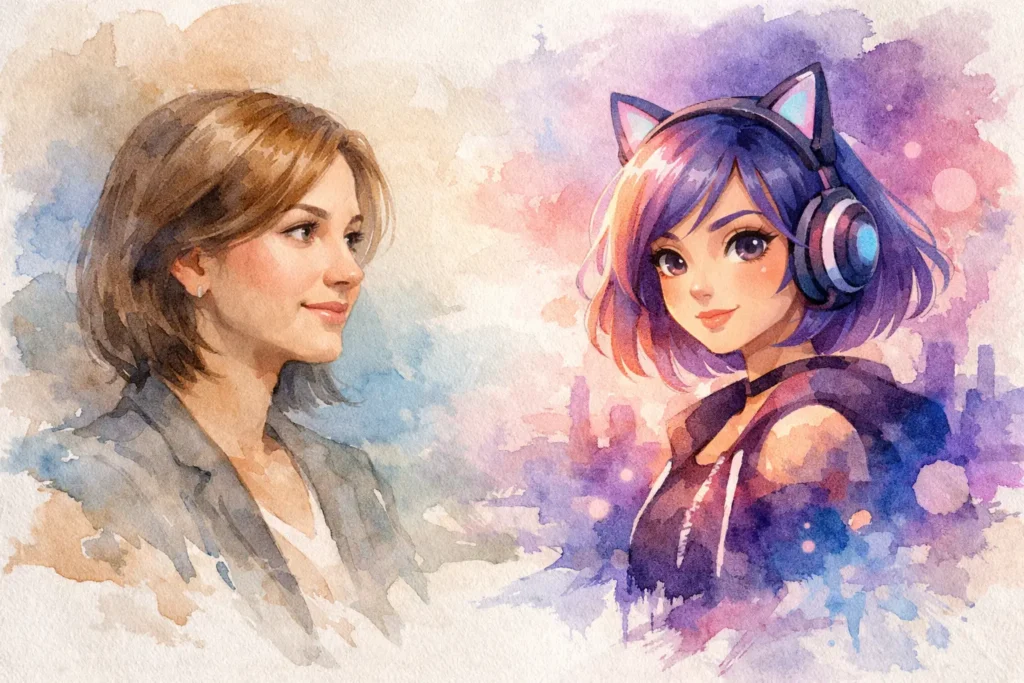
A recruiter opens your LinkedIn profile. A casting associate scans your submission. A prospective client checks the About page before deciding whether to book a call. In each case, your image is doing work before anyone reads a word. The question of headshots versus avatars is not really about which image is more creative. It is about what people need to know about you, and how quickly they need to trust it.
Avatars have a place in modern communication. They can be playful, consistent, private, and easy to use across platforms. But when your face, credibility, or personal connection is part of the professional decision, a strong headshot usually carries more weight.
Headshots Versus Avatars: The Core Difference
A professional headshot is a current, intentional photograph that shows how you look and how you want to be perceived in a work-related context. It does not need to be stiff or overly formal. The best headshots feel clear, natural, and specific to the person in the frame. They give viewers real information: your expression, energy, confidence, approachability, and level of professionalism.
An avatar is a representation rather than a photograph. It may be an illustration, a stylized graphic, a cartoon, a 3D character, or an AI-generated image. In some settings, it is a practical shortcut. It creates visual consistency for an online community, a gaming profile, a company chat platform, or a brand that intentionally keeps individual identities secondary.
The distinction matters because people interpret photographs and illustrations differently. A real image says, “This is me, and I am prepared to show up.” An avatar can say, “This is my online identity,” which may be perfectly appropriate, but it creates more distance between the viewer and the person behind it.
That distance is not automatically a problem. It becomes a problem when your goal is to be hired, cast, trusted, remembered, or contacted.
When a Professional Headshot Is the Better Choice
For most public-facing career situations, a headshot is the stronger tool. If someone is choosing whether to meet with you, represent you, hire you, or put you in front of their audience, they want a sense of the real person involved.
Actors need a current, believable image
Actors are a clear example. Casting is built around human presence, not just a list of credits. A casting team needs to see your type, your range of energy, and whether your look aligns with the role they are considering. An illustrated avatar removes the exact information they are trying to evaluate.
A good actor headshot is not about looking like a more polished version of someone else. It should feel like you on a good, confident day. Your expression, wardrobe, framing, and background should support the kinds of roles you are pursuing without trying to force a character. That is why a current professional photo is non-negotiable for submissions, agency materials, and most casting platforms.
Professionals benefit from visible credibility
For executives, job seekers, consultants, attorneys, financial professionals, and other business-facing people, a headshot helps reduce uncertainty. You are asking people to trust your judgment, expertise, or leadership. Showing your real face is a straightforward way to make that interaction feel more personal.
This is especially true on LinkedIn, company websites, speaker bios, press materials, proposal documents, and professional directories. A polished headshot gives your profile a sense of care and consistency. It also signals that you understand the expectations of the space you work in.
That does not mean every business headshot needs a suit, a gray backdrop, and a serious expression. A startup founder may need a more relaxed environmental portrait. A creative director may benefit from a more editorial feel. A corporate leader may need a clean, consistent image that matches the rest of the team. The right choice depends on the audience, but the image should still look like a real person ready to do real work.
Entrepreneurs are often part of the product
If you own a service business, your personality and presence influence buying decisions. Clients may be hiring your expertise, but they are also deciding whether you seem clear, capable, and easy to work with. An avatar can be memorable, yet it rarely offers the same reassurance as a well-made portrait.
This is particularly relevant for coaches, therapists, real estate professionals, designers, consultants, and founders who build relationships before a sale happens. Your headshot does not need to be overly sales-driven. It simply needs to make it easier for the right people to recognize you, connect with you, and take the next step.
When an Avatar Makes Sense
There are situations where an avatar is not only acceptable but useful. The key is to use it with intention rather than as a substitute for a photo you have been avoiding.
An avatar works well when privacy is central to the platform or community. It can also suit a casual internal chat profile, a personal social account, a newsletter with a distinct illustrated brand, or an online community where the tone is intentionally informal. Some creators use custom illustrations as part of their visual identity, especially when their work is centered on a recognizable graphic style.
For a large company, avatars can also support internal culture. A team may use illustrated profile images in Slack or another messaging platform while maintaining professional headshots on its website and in external communications. In that case, each image has a different job.
AI-generated avatars require extra caution. Even when they look polished, they can create an uncanny feeling or misrepresent your current appearance. Details such as eyes, teeth, hair, clothing, and skin texture may look subtly wrong. More importantly, an AI image can make people question whether they are seeing the real you. If your work depends on trust, that uncertainty is rarely helpful.
The Cost of Looking Generic
The real risk is not choosing an avatar over a headshot once. It is using an image that is disconnected from your professional goals.
A generic avatar may make a carefully built LinkedIn profile feel unfinished. An old headshot can create a different problem: someone meets you in person and has trouble recognizing you. A heavily filtered image can signal insecurity. A casual cropped photo from a wedding or night out may communicate that your public presence was an afterthought.
People make quick judgments from visual cues. That is not always fair, but it is real. Your image can suggest preparation, clarity, warmth, authority, creativity, or inconsistency before you have the chance to make your case. The goal is not to manipulate that reaction. It is to make sure the first impression is accurate and useful.
How to Choose the Right Image for Each Platform
Start with the context, not your personal preference. Ask what the viewer needs from you in that moment. Do they need to recognize you in a meeting? Are they deciding whether you are credible? Are they evaluating your fit for a role? Or are they simply interacting with you in a casual online space?
If recognition and trust matter, choose a current professional headshot. If your role involves performance, client service, leadership, sales, or public visibility, the decision is usually straightforward. Use the photo.
If the space is casual or privacy-focused, an avatar may be a better fit. You can also use both without creating mixed signals. Keep a professional headshot for external platforms and a branded avatar for less formal channels. Consistency does not mean using the exact same image everywhere. It means that every image supports the same overall impression.
For teams, consistency deserves special attention. A company site where one employee has a studio-quality headshot, another has a vacation crop, and another has an avatar can feel disorganized even if every person is highly qualified. Coordinated office headshots give people a shared visual standard while still allowing individual personality to come through.
A Headshot Should Still Feel Like You
Some people choose avatars because being photographed feels uncomfortable. That is understandable. Many capable professionals dislike being in front of the camera, especially if they have had rushed or awkward photo experiences in the past.
A thoughtful headshot session should not ask you to perform a version of confidence you do not recognize. It should provide clear direction, useful feedback, and enough time to settle into the process. Small adjustments to posture, expression, angles, wardrobe, and pacing can make a major difference. The result should look polished, but never disconnected from who you are.
For clients in New York City, that is often the practical value of working with a photographer who understands both the technical and human side of the process. You are not just receiving a file. You are creating an image that needs to work in the places where your career is actually happening.
Choose the image that makes it easiest for the right person to recognize your value. If that person needs to see you, let them see you clearly.